.png)

Read Time : 8 Minutes
Is my Property in the UK Suitable for a Heat Pump?
Many factors must be considered before choosing to install a heat pump system in your home or business.
The main considerations are:
How energy efficient is your property?
Heat pumps work best in well insulated, air tight properties. Although there are now high temperature heat pumps that can reach similar flow temperatures as combustion boilers, standard heat pumps are designed to operate at a lower temperature. We'll cover this in a more detail further on.
How suitable is your central heating system?
Heat pumps often require double or over-sized radiators, the optimal solution is wet underfloor heating but well sized radiators are fine too. The pipework should be 15mm or larger, central heating systems with short runs of microbore pipework could be usable but generally, you may be looking at incurring additional cost and upheaval if your pipework is 10mm or smaller throughout.
How much space do you need to heat and how much outdoor space you have?
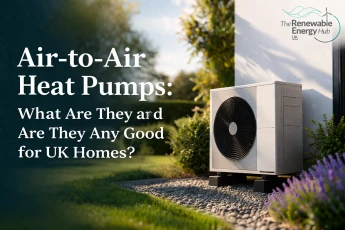
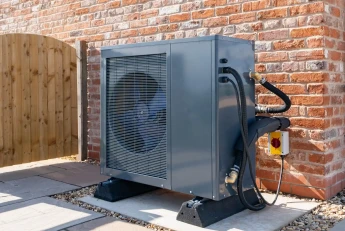
An ASHP doesn't need too much space, they're about 1.2–1.5m x 0.9–1.2m x 0.4–0.6m depending on model. They are generally installed outside on an external wall or on the ground. In England, the former “1 metre from the boundary” restriction has been removed, while Wales generally requires 3 metres under permitted development rules. Split ASHP systems can be a bit more flexible with location.
Though air-source heat pumps don’t require as much space as ground-source heat pumps they still need a big enough space outside your property, usually at the side or back, to allow adequate air circulation around the heat pump unit. They should also be located where noise from the unit won’t be a disturbance. Although modern air source heat pumps are much quieter than their predecessors, they still emit a low-level operational hum, particularly during defrost cycles.
In the case of a ground source heat pump, you will need a considerable amount of land or suitable access for drilling equipment to dig a borehole. For horizontal coil systems, usually a large area of land (often comparable to or greater than the footprint of the dwelling, depending on heat demand and ground conditions) which you do not mind digging up to lay the ground loop system containing the thermal transfer fluid. If you do not have the required space or if you do not want to dig up your garden, it may be best to consider an air-source heat pump system, which is much more compact (and affordable) and more suited to urban areas.
And finally.. What is your budget?
A small air-to-air heat pump can cost as little as £2,000–£4,000 to install, depending on specification and number of indoor units.
An air-to-water heat pump (by far the most common) starts at around £7,000–£9,000 but can go up to £15,000–£17,000 for a normal three or four bedroom property, depending on installation complexities, brand choice and installer costs.
Ground source heat pumps (GSHP) are among the most efficient heating systems available but do carry a high price tag, starting at around £18,000–£20,000 and often going to £35,000+.
Visit our 2026 article, How much do heat pumps cost to install, run and maintain? for more info.
Heat Pumps for Older Properties?
We often get asked the question 'Do heat pumps work in poorly insulated properties?'
Your property’s level of insulation will impact heavily upon the cost and energy efficiency offered by air and ground source heat pumps. Although insulation is also needed for traditional boilers, you’re more likely to feel the effects of inadequate insulation with heat pumps as they are designed to produce an ambient heat on an ongoing basis, rather the blast of heat from a traditional combustion boiler. Heat pumps channel heat slowly over longer periods of time, effectively heating the property through.
If your home is properly insulated, it will be able to retain heat and you’ll be able to enjoy the benefits of an air source heat pump but there are some caveats we will address in this article. Without adequate insulation, however, you could find yourself switching up the thermostat more often, which will increase your bills.
There are high temperature heat pump options which are capable of reaching comparable temperatures to combustion boilers, but these typically operate at lower efficiency and higher running cost, (see more here) but in this article we will focus on traditional heat pump systems.
COMPARE PRICES FROM LOCAL INSTALLERS
Compare prices from local companies fast & free
Enter your postcode to compare quotes from leading professionals. We promise to keep your information Safe & Secure. Privacy Policy
Here are some ways you can assess and improve your home's insulation:
- Wall Insulation: Make sure your walls are adequately insulated. For homes with cavity walls, cavity wall insulation can be installed. Solid wall homes might need external or internal insulation.
- Loft Insulation: Loft insulation is especially important as a significant amount of heat can escape through the roof. Ensure your loft is insulated to the recommended 270mm of thickness.
- Floor Insulation: Insulating floors, particularly in older homes with suspended wooden floors, can prevent heat loss.
- Windows and Doors: Double or triple glazing and draught-proofing around windows and doors can significantly reduce heat loss.
Is it Worth Installing a Heat Pump for my UK Property?
Though heat pumps are usually very efficient, local climate can affect their performance. In the UK, air-source heat pumps are specifically designed to work efficiently even in colder temperatures (down to around –15°C and in some models –25°C). However, extremely low temperatures can reduce efficiency and correct system sizing becomes increasingly important rather than requiring a backup heat source in most homes.
If you are considering replacing a gas boiler (not LPG or oil boilers), heat pumps may work out to be slightly more expensive to run without careful system design, insulation, and tariff optimisation. This is because heat pumps work at a lower temperature than a combustion boiler and generally perform better with underfloor heating and/or oversized radiators. However, as gas prices rise and the electricity grid decarbonises, heat pumps are expected to become one of the cheapest and lowest-carbon forms of heating available.
The initial cost of installing heat pumps may be prohibitive for some as they tend to be more expensive than traditional heating systems. However, they offer long-term savings due to their efficiency. The UK government is also offering attractive incentives such as the Boiler Upgrade Scheme (BUS), which can provide £7,500 towards the upfront costs. Air source heat pump installations typically cost between £7,000 and £14,000, and ground source heat pumps between £18,000 and £35,000, depending on property and installation complexity.
When compared to traditional boilers heat pumps require less maintenance. Regular checks and servicing will ensure optimal performance and longevity. The expected lifespan of a heat pump is around 15–20 years on average, compared to 10–15 years for a conventional boiler.
Many more people today want to live a more sustainable lifestyle and reduce their carbon footprint. Heat pumps can help you do this as they have significantly less of an impact on the environment compared to fossil fuel-based heating systems. They can reduce your home’s carbon footprint, especially if paired with renewable electricity sources. If you switch to a heat pump you are contributing to the UK's target of reducing greenhouse gas emissions.
Property Value Impact Associated with Installing a Ground Source or Air Source Heat Pump
Will a heat pump increase my property value?
Although there is currently little definitive evidence to suggest that heat pumps will affect the value of your property either by increasing or decreasing it, there has been some research conducted in recent years that shows installing an air source heat pump in your property may modestly improve property value.
Research carried out and presented in the 2022 ‘Better Homes, Cooler Planet’ report by the World Wildlife Fund (WWF-UK) and Scottish Power indicated that a heat pump could add between 1.7 and 3.0% to the value of your home. Research conducted by the Department of Business, Energy & Industrial Strategy (BEIS) has also shown that properties with energy-efficient features tend to have higher selling prices than less efficient counterparts.
The low aesthetic impact and efficiency benefits of heat pump installations mean that their presence may be seen positively by some buyers, though value uplift is not guaranteed and varies by market conditions.
The top reasons why a heat pump could add value to your property are the following:
- Improve Energy Performance Certificate rating
- Improve energy efficiency saving you money
- Some heat pumps offer cooling and air conditioning features which could add up to 2.5% to the value of your property.
- Futureproof your home against heating regulations being put in place to help the UK reach net-zero greenhouse gas emissions by 2050.
So, installing a heat pump may not only reduce your energy bills and environmental impact but also increase the value of your property.
There are many different kinds of heating systems used in homes. You’ll find that the systems are classified in a few different ways. The first way is by the type of fuel they use, and the second way defines how they distribute heat throughout the home. These fuel sources include oil, natural gas, electricity, and even the sun. The heat generated by these fuel sources can be distributed by air, electric wiring, radiation, or water.
The value put on the heat pump system by the estate agent or by the future buyer will most likely be down to personal preference and a few other factors such as the temperature at the time of the sale and recent seasonal variations. If there has been a very cold winter, people are more likely to put a high value on a pre-installed heating system that is cost-effective and adequately heats the property.
If two identical homes were side by side a buyer would most likely go for the home with the heat pump system, but how much extra would they be willing to pay to cover your costs which will usually be more than £5000 that the heat pump system set you back in the first place? Well, it’s impossible to say at this time. A new roof for example doesn’t add much to your property but an old or damaged roof will certainly detract from the value of a property. So perhaps a new heat pump system might not add much value, but an old inadequate gas boiler system may detract from a property’s value. Make sure your estate agent knows the value of the heat pump system and sells it to the prospective viewer in the best way possible.
A real estate appraiser will most likely see your heat pump system as a contributory factor and add a small amount of value to the asking price but generally, they will see it as part of the whole and describe it as an additional appeal.
Integrating a Heat Pump with Existing Heating Systems
It is most common to completely replace existing heat sources with heat pumps. Nevertheless, depending on the system and property specifications, air and ground source heat pumps can be integrated with existing heating systems, including hybrid systems paired with a boiler.
While heat pumps can be easily connected to existing radiators, this is not the most effective way of using the heat generated, for they require a high level of heat. Traditional radiators designed for high-temperature systems may need to be replaced or modified to allow for the low-temperature of a heat pump. Ideally, you should increase the size of the radiators in each room to reach maximum performance.
If you are currently using radiators to heat your home, the best way of optimising system efficiency is to either install underfloor or warm air heating, since these require a lower level of heat over a longer time.
Heat pumps work most efficiently with larger surface area radiators or UFH systems, which can distribute water effectively at low temperatures. Underfloor heating may not be suitable for some properties, however: some older buildings in particular are likely to be too energy inefficient.
Adjusting the size of your radiators and/or installing underfloor heating ensures that your heat pump system operates within its optimal efficiency range to provide you with a warm home.
Legislation and Planning Permission Associated with Air and Ground Source Heat Pumps
Air Source heat pump planning considerations
Across the UK, air source heat pumps are generally considered permitted development subject to national rules and local exceptions.
Key points (which vary by nation):
- Your air source heat pump can only be used for space heating and hot water.
- Only the first air source heat pump falls under permitted development rights. Adding a second would require planning permission.
- An air source heat pump is a permitted development only on the condition that there isn’t a wind turbine on your property. If there is, you’ll need to apply for planning permission.
- The air source heat pump must be removed when it’s no longer in use.
- The installation must comply with the Microgeneration Certification Scheme Planning Standards (MCS 020).
- The heat pump must be located in a way that minimises its effect on the appearance of the building and the amenity of the area. This may involve placing the external unit at the back of the house, out of view from the road, or if you’re fixing it to a wall, it must be below the first storey. In Scotland, the unit definitely should not be seen from the public highway.
- The air source heat pump must be installed on flat surfaces. You may be permitted to site the external unit on a flat roof providing it’s at least 1 metre from the roof’s edge, but you should check with your local planning office to be on the safe side (England, Scotland, and Wales only). The air source heat pump cannot be placed on a pitched roof.
- The size of the external compressor (the outdoor unit and housing) in England shouldn’t be larger than 0.6m3. In Wales, the compressor unit and housing shouldn’t exceed 1m3. In Scotland, it can’t be taller than 3 metres and in Northern Ireland, the external unit must be no taller than 2 metres.
- In England and Scotland, the air source heat pump must be at least one metre from the property’s boundary and the nearest house.  In Wales, it must be more than 3 metres, and in Northern Ireland, the external unit must be more than 30 metres away from the nearest house (other than your own).
- The external unit can’t protrude more than 1 metre from the outer wall, roof, or chimney of the dwelling.
Ground Source Heat Pump planning considerations
Across the UK, air source heat pumps are generally considered permitted development subject to national rules and local exceptions.
Key points (which vary by nation):
- Listed buildings and conservation areas may require consent
- Units must primarily be used for space heating and hot water
- Only one ASHP is permitted under PD rights
- Installations must comply with MCS 020 noise standards
- Size and siting restrictions vary between England, Wales, Scotland and Northern Ireland
- Boundary distance requirements differ by nation and have changed over time
- Ground Source Heat Pump Planning Considerations
- Ground source heat pumps are usually considered permitted development due to limited visual impact, though local authority and environmental permissions may still be required, particularly for boreholes.
- Planning permission must be sought for listed buildings and conservation areas. Installations must comply with MCS standards if claiming the Boiler Upgrade Scheme.
- The installation must comply with the Microgeneration Certification Scheme Planning Standards if you are going to take advantage of the Boiler Upgrade Scheme. It’s important to choose an installer who is accredited and part of the Microgeneration Certification Scheme (MCS). You can search our installer database for a list of accredited installers close to your postcode here.
In England and Wales, you can find out more information on the Government’s Planning Portal website: http://www.planningportal.gov.uk/planning/greenerhomes/generation/heatpumps
The Scottish Government’s permitted development information can be found here: https://www.gov.scot/publications/householder-permitted-development-rights-guidance-updated-2021/pages/6/
Find a local installer
Welcome to the biggest directory of UK renewable energy companies
 How Does a Heat Pump Work? UK Guide 2026